10.100 Private Network Address Explained
The 10.100.x.x range is a private address space for internal deployments beyond common RFC1918 ranges. It supports scalable, isolated labs, testing, and inter-segment routing without public Internet exposure. This choice demands careful sizing, subnet planning, and consistent border control to maintain security and reliability. Its distinctions from other private ranges matter for architecture and troubleshooting. As operations consider adoption, discipline in policy, diagnostics, and repeatable processes becomes essential to prevent leakage and ensure dependable connectivity across domains.
What 10.100 Addresses Are and Why They Exist
Private Network Addresses in the 10.100.x.x range are reserved for internal use within private networks and are not routable on the public Internet. The 10.100 block exists to support scalable, isolated deployments, enabling experimentation and secure segmentation without public exposure. These addresses serve internal routing, logging, and lab environments, where unrelated topics, never used, remain outside external reach. Freedom motivates controlled, private experimentation.
10.100.X.X Vs Other Private Ranges: Key Differences
The 10.100.x.x block differs from other private ranges in scope, addressing granularity, and typical use cases, providing an alternative for large-scale isolation and internal routing beyond the more common 10.0.0.0/8, 172.16.0.0/12, and 192.168.0.0/16 allocations.
This topic highlights private address usage, subnetting challenges, and 0. It remains concise, technical, and oriented toward freedom-minded networks seeking scalable privacy and control.
Sizing, Subnetting, and Routing for 10.100 Networks
Sizing, subnetting, and routing for 10.100 networks require precise planning to balance address utilization with scalable isolation; how large should the addressing plan be to accommodate growth without fragmentation?
The discussion centers on capacity forecasting, subnet granularity, and border routing considerations.
10.100 sizing guides allocation density, while 10.100 routing defines route aggregation, summarization, and scalable interconnectivity across segments.
Troubleshooting, Security, and Best Practices With 10.100
Troubleshooting, security, and best practices for 10.100 networks require a disciplined, methodical approach to isolate issues, enforce policy, and sustain reliable operation across segments.
The guidance emphasizes context specific security implications and careful address allocation to minimize exposure, protect traffic, and enforce access controls.
Diagnostics should be repeatable, auditable, and minimally invasive, ensuring freedom to adapt while preserving consistent network integrity.
Frequently Asked Questions
Can 10.100.X.X Be Routed on the Public Internet?
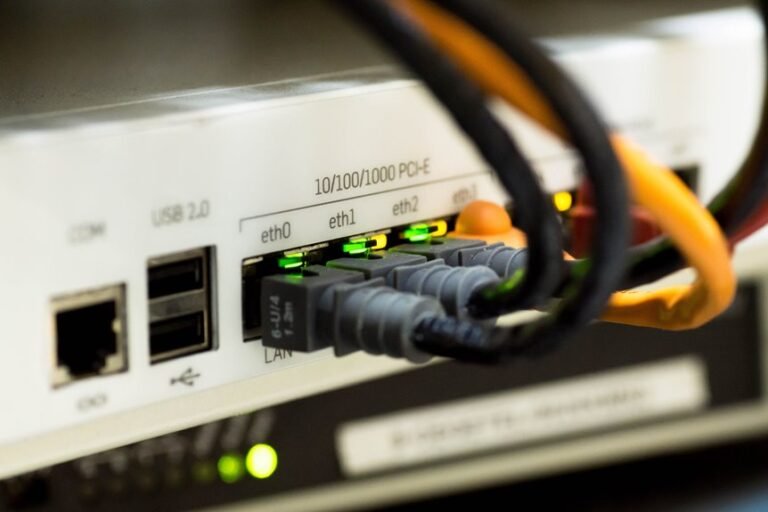
Answer: No; 10.100.x.x private addresses are non-routable on the public internet. The statement holds despite eth2 optimization and routing quirks, which influence internal handling but not public reachability. Access requires NAT or private-network gateways, not direct routing.
Are 10.100.X.X Addresses Eligible for ISP Assignment?
“Sure, because public internet love letters start with 10.100.x.x.” The analysis notes that 10.100.x.x are private addresses; ISP assignment considerations depend on addressing scope, and these addresses are not eligible for standard ISP assignment. They’re reserved.
How Do 10.100.X.X Addresses Interact With VPNS?
10.100.x.x addresses function as private networking, not publicly routable; they interact with VPNs by remaining encapsulated within tunnels, preserving privacy and security. Using private networking, vpn compatibility depends on gateway policies and endpoint configuration; access remains controlled and portable.
What Are Performance Implications of Using 10.100 Ranges?
Latency considerations arise with 10.100 ranges due to potential routing inefficiencies and VPN overhead; address translation can introduce processing delays. The implication is modest for small scales, but scale amplifies latency and complicates network performance management.
How Does NAT Handle 10.100 Addresses in Large Networks?
NAT handles 10.100 addresses in large networks by translating internally, preserving private addressing while mapping to public routes; scale depends on NAT devices, pool size, and session limits. Topic ideas: private addressing, NAT scale, crowd-sourced.
Conclusion
In summary, 10.100.x.x serves as a disciplined private theater for large-scale experiments, where isolation and controlled routing replace public exposure. Like a private harbor, its ranges offer scalable segmentation, precise sizing, and auditable diagnostics, demanding rigorous policy, monitoring, and repeatable practices. The result is secure interconnection across segments, with predictable performance and clear boundaries. For engineers, it’s a carefully chartered map—visible to insiders, invisible to the public wilderness.