168.011 Router Login and Network Guide
The guide on the 168.011 router outlines a structured process for accessing the admin interface via wired or wireless connections. It emphasizes securing the admin panel, establishing baseline network settings, and enforcing strong authentication. It also addresses Wi‑Fi optimization, log monitoring, and change-control discipline. Practical steps are presented with a focus on repeatable procedures and auditable records, while potential pitfalls are noted. A careful reader will encounter an unfinished sequence that invites further examination to complete a robust configuration.
How to Log in to the 168.011 Router
To log in to the 168.011 router, users should connect a device to the router’s network either via Ethernet or its Wi‑Fi signal and then open a web browser to the device’s default gateway address. Access is governed by login credentials entered on the router interface, which authenticates administrative rights and enables configuration without extraneous steps or delays.
Secure the Admin Panel and Network Basics
First, securing the Admin Panel involves enforcing strong authentication, restricting administrative access to trusted devices, and enabling encrypted connections to prevent unauthorized configuration changes. The approach treats network basics as a disciplined framework, prioritizing minimal exposure and robust logging. An unrelated topic is avoided; instead, a tangential concept clarifies risk assessment, ensuring consistent policy enforcement and auditable change control across all management interfaces.
Optimize Wi-Fi Performance and Reliability
Optimizing Wi-Fi performance and reliability requires a systematic approach that identifies bottlenecks, mitigates interference, and ensures stable client connectivity. The analysis emphasizes channel optimization, proper access point placement, and firmware updates, while documenting bandwidth allocation strategies. Wireless interference is mitigated through spectrum-aware tuning. Device prioritization governs critical applications, ensuring predictable latency and sustained throughput without compromising broader network accessibility or security controls.
Troubleshoot Common Connection Issues and Pitfalls
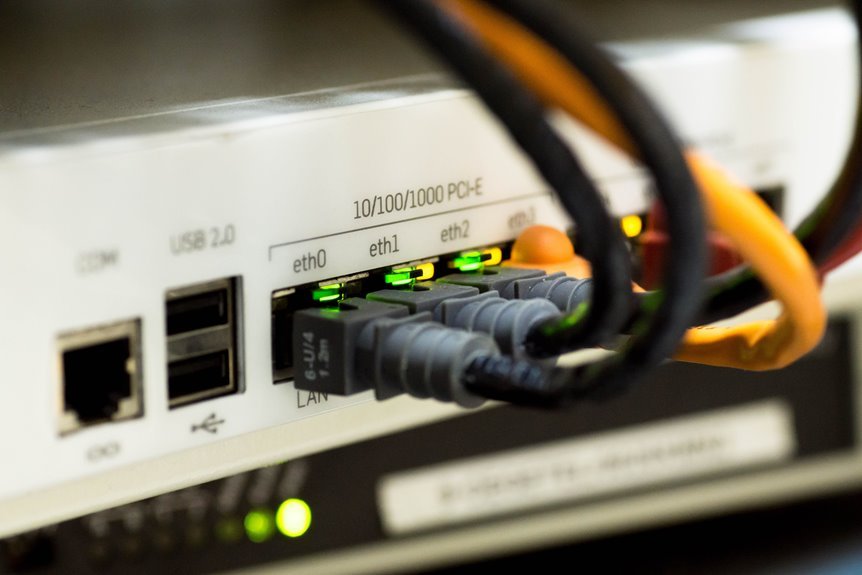
How can common connection issues be diagnosed and resolved efficiently in a router environment? The approach is procedural and objective: verify physical links, inspect LED indicators, and catalog symptomatology. Isolate causes through controlled reboots, firmware updates, and channel analysis. Monitor for disconnecting devices, ensure consistent DHCP behavior, and test wired versus wireless paths. Document steps to reduce recurrence and maintain network agility.
Frequently Asked Questions
How to Reset the Router to Factory Defaults?
To perform a reset, locate the reset button, press and hold (10–15 seconds) until LEDs flash, then release. This initiates a factory reset, restoring default settings and credentials; reconfigure network specifications as required, preserving a freedom-focused, manual approach.
What Parental Controls Are Available on 168.011?
Parental controls are configurable per user profile; device management allows schedule or block rules, content filters, and time limits. The system offers granular settings, enabling freedom-aware enforcement while preserving access control through prioritized, rule-based configuration across connected devices.
How to Update the Router’s Firmware Manually?
The procedure involves downloading the correct firmware package, verifying its integrity, and applying a manual update via the router’s interface. Update frequency should be monitored; firmware naming conventions must be observed to ensure compatibility and traceability.
Can I Enable Guest Network Isolation and Access Limits?
With guest network isolation and access limits possible, yes. Allegorically, a lighthouse partitions fog with nets; parental controls, firmware updates guide the beam. Implement guest network, set access limits, enable parental controls, and regular firmware updates.
Where to Find Advanced DNS and Port-Forwarding Options?
Advanced DNS and port-forwarding options appear under Network Settings > Advanced. The section emphasizes network security and device prioritization, guiding users to configure DNS overrides, firewall rules, and prioritized port mappings while preserving freedom for custom rules.
Conclusion
The 168.011 router login and network guide emphasizes disciplined access control, encrypted administration, and a documented change workflow. By validating device trust, enforcing strong credentials, and monitoring logs, administrators sustain reliable connectivity. Spectrum-aware tuning and proactive troubleshooting further reinforce performance and security. How can meticulous, auditable practices transform routine maintenance into resilient network governance? In disciplined implementation, administrators ensure consistent configuration, verifiable history, and dependable service, even as evolving demands challenge future-proof, secure access.